
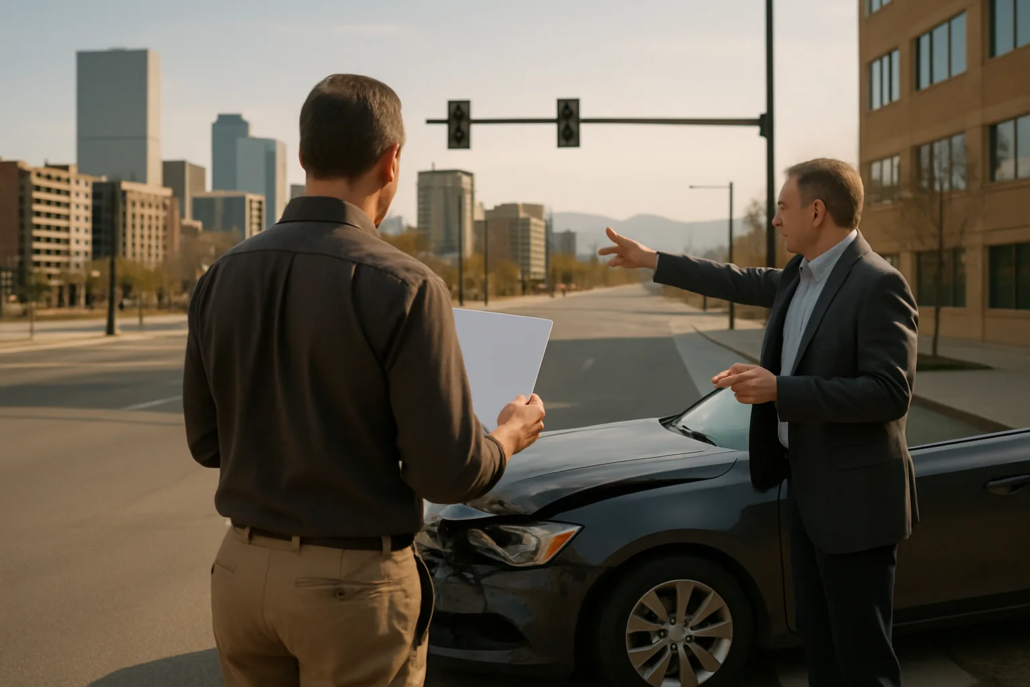
How Can You Flag Factual Errors in a Denver Crash Report?
A collision can leave you dealing with vehicle damage, insurance questions, and an accident report that does not seem to describe what happened. If you believe the report is inaccurate, you may ask: can you correct a police report after a car accident in Denver? In many cases, a factual error can be brought to the investigating agency’s attention, although the process and available options depend on the agency and the nature of the issue.
A report may contain incorrect vehicle information, a mistaken location, an incomplete witness account, or an omission about roadway conditions. It may also include an officer’s observations or conclusions that cannot simply be edited because one driver disagrees with them. Neumann helps Colorado crash victims understand the difference between correcting a factual mistake and challenging an interpretation.
This guide explains how to review a Denver crash report, contact the appropriate agency, preserve independent evidence, and understand what the report can—and cannot—establish in an insurance or injury claim.
What a Denver Police Crash Report Can and Cannot Establish
A crash report is usually prepared from the officer’s observations, statements gathered at the scene, physical evidence, and information available at the time. It can provide a useful timeline and identify the people, vehicles, roadway, and apparent circumstances involved. Insurers, attorneys, and other reviewers may consider it when evaluating a claim.
However, the report is not automatically a final legal determination of fault. An officer may not have witnessed the collision. Traffic conditions may have changed before the officer arrived, and witnesses may provide incomplete or conflicting accounts. A report can also contain separate sections for factual information, diagrams, statements, and opinions.
Separate clerical errors from disputed conclusions
A clerical or factual error might include a misspelled name, incorrect vehicle description, wrong intersection, or inaccurate insurance information. These issues may be easier for the investigating agency to verify and address.
A disputed conclusion is different. For example, a driver may disagree with an officer’s description of the point of impact or an apparent traffic violation. The agency may not revise an opinion merely because a party requests a change. Supporting photographs, video, witness information, or other objective evidence may be more useful than a general disagreement.
Review the entire report
Read the narrative, diagram, contributing-factor section, citations or violation information, and any supplemental pages. Compare them with your own records while your memory is fresh. Avoid altering original photographs or deleting messages, dashcam files, or other material that may help explain the sequence of events.
How to Request a Denver Accident Report Correction
The first step is generally identifying which agency investigated the collision. Depending on where the crash occurred, that may be the Denver Police Department, the Colorado State Patrol, or another local law-enforcement agency. A report obtained through a records portal or another office may still need to be corrected by the original investigating agency.
Contact the agency’s records unit or the officer’s designated supervisor using the agency’s current procedure. Ask how it accepts requests to supplement or review a report. Procedures can vary by agency, and an agency may distinguish between correcting objective information and adding a supplemental statement.
A clear request commonly includes:
- The report or incident number, if available
- The date, location, and vehicles involved
- The specific statement or field believed to be inaccurate
- A concise explanation of why it is incorrect
- Supporting materials, such as photographs or witness contact information
- A request for written confirmation of how the agency will handle the issue
Keep copies of your request and attachments. Use factual, professional language. A request that identifies a precise error is generally easier to evaluate than a broad statement that the report is unfair. Do not assume that sending a correction request automatically changes the report or pauses an insurance deadline.
If the agency does not revise the original report, it may accept a supplemental statement or retain your correspondence in its records. Ask whether a supplement can be associated with the report and how it may be obtained by an insurer or other authorized recipient. Colorado procedures can vary by agency and may change, so current instructions from the investigating agency should control.
Denver crash documentation may also be reviewed in connection with a claim, traffic matter, or civil case. Those settings can involve different standards and deadlines. An attorney can explain how a report issue may fit within the broader circumstances, but no report correction guarantees a particular insurance or legal result.
Preserving Evidence When the Police Report Is Wrong
A correction request should not replace independent evidence preservation. If the report has an error, other information may help show what occurred and provide context for the disputed point.
Consider preserving, when available and lawfully obtained:
- Scene and vehicle photographs. Keep original image files and note when and where they were taken. Images may show lane positions, traffic controls, lighting, damage patterns, debris, or roadway conditions.
- Witness information. Record names and contact details, along with a neutral description of what each person observed. Avoid coaching witnesses or asking them to adopt a particular conclusion.
- Video. Dashcam, business-security, residential, or traffic-camera footage may be overwritten or deleted. Preserve the original file and its source information rather than relying only on a screen recording.
- Vehicle and repair evidence. Keep photographs of damage, repair estimates, inspection records, tow documents, and information about any damaged safety equipment. Do not dispose of or materially alter a vehicle when its condition may be relevant without considering evidence-preservation concerns.
- Communications and claim records. Save messages with witnesses, insurers, towing providers, and repair facilities. Keep a record of when materials were sent and to whom.
Common mistakes to avoid
Do not post a detailed account of the collision on social media or make statements that speculate about fault. Do not edit video files, discard damaged parts, or assume that a later memory can replace contemporaneous evidence. Also, avoid confronting a witness or asking another driver to change a statement.
If the report affects a claim, an attorney may help organize the evidence, identify inconsistencies, and communicate with insurers. The value of any item depends on authenticity, relevance, and the circumstances in which it was created or preserved.
Frequently Asked Questions
Can I ask the officer to rewrite a Denver crash report?
You may contact the investigating agency and ask about correcting a factual error or adding a supplemental statement. The officer or agency may review the request, but it may not rewrite an opinion simply because a driver disagrees with it. The agency’s current process controls. Keep your request specific, provide supporting documentation, and retain a copy of everything submitted.
What if the other driver’s statement in the report is inaccurate?
Explain the specific inconsistency to the investigating agency and preserve evidence that may provide context, such as photographs, video, or independent witness information. Avoid accusing the other driver of intentional dishonesty unless there is a factual and legally appropriate basis. An insurer or attorney may evaluate competing accounts together with the physical evidence and other records.
Does a police report decide who is liable for a Denver car accident?
Not necessarily. A report can be important evidence, but it is generally one source of information rather than an automatic final decision in a civil claim. Liability may depend on witness testimony, photographs, video, vehicle evidence, applicable Colorado law, and other facts. The effect of a report can also differ between an insurance review, traffic matter, and civil proceeding.
How long should I keep evidence from a Colorado crash?
Keep relevant photographs, videos, repair records, communications, and report copies for as long as the related insurance or legal matter may remain active. Potential deadlines can depend on the type of claim and the parties involved. Because evidence can be lost quickly and legal deadlines vary in Colorado, an attorney can provide guidance based on the particular circumstances.
How Neumann Can Help
Neumann is dedicated to helping people understand how crash documentation fits into a Colorado car accident claim. The firm can review the report, distinguish potential factual errors from disputed conclusions, and help identify evidence that may provide a fuller account of the collision.
Neumann is committed to fighting for clients’ rights while communicating clearly about available options, practical considerations, and uncertainty. The team is ready to evaluate your situation and discuss whether legal representation may be appropriate. Contact Neumann for a free consultation or case evaluation.
The information in this article is for educational purposes only and does not constitute legal advice. Contact a qualified attorney licensed in Denver for advice specific to your situation.

