
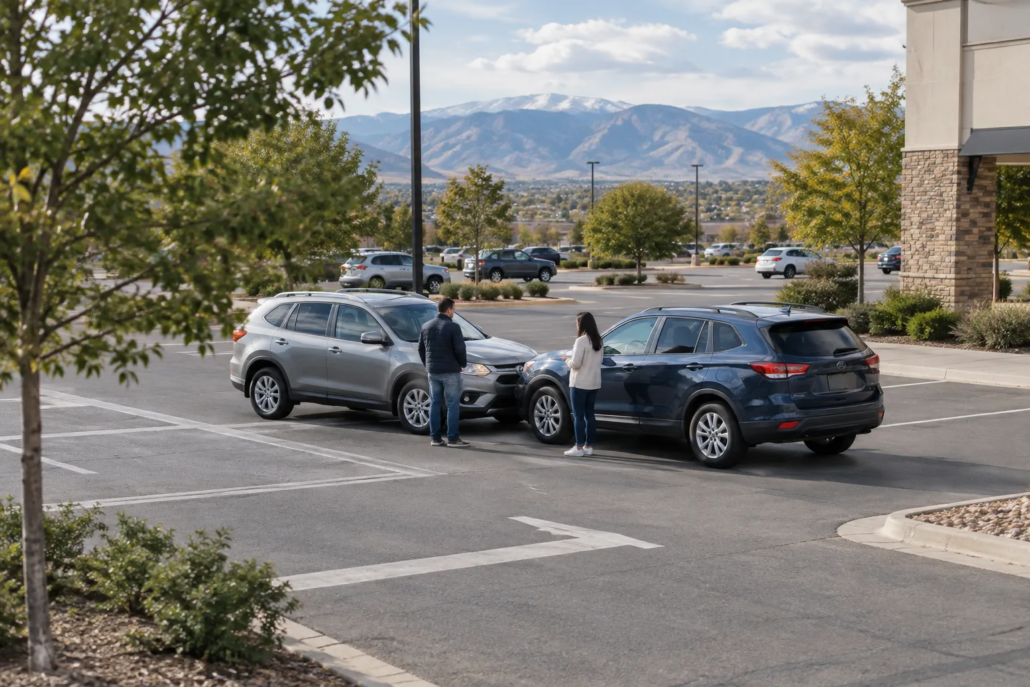
Who Could Be Liable After a Denver Parking Lot Accident?
A parking lot crash can happen in seconds: one car backs out of a space while another travels down an aisle, or two drivers reach an unmarked intersection at the same time. Figuring out who may be responsible is not always as simple as deciding which vehicle was moving. Denver parking lot accident liability can depend on each driver’s actions, the lot’s layout, what was visible, and whether a property-related hazard played a role.
The evidence can also disappear quickly. Vehicles move, weather changes, and surveillance footage may only be retained for a limited time. Neumann helps Colorado readers understand the practical questions that can shape a car accident claim. This guide explains how vehicle movements, markings, visibility, and lot control may inform fault—and what people can record after a collision in Denver.
How Denver Parking Lot Accident Liability Depends on the Scene
Parking areas can combine driving aisles, parking spaces, pedestrian routes, loading areas, and entrances in a compact space. Drivers may need to watch for vehicles backing out, cars turning across an aisle, and people walking between rows. There may be no clear painted lane or traffic control at every meeting point. That does not make fault impossible to assess; it makes the details of the scene especially important.
Vehicle movements and right-of-way clues
The cars’ directions and positions can help show what happened. A driver backing out of a space may have a different view and movement pattern from a driver already traveling along an aisle. But neither description alone settles responsibility. Investigators and insurers may consider speed, lookout, stopping distance, signals, and whether either driver had a reasonable opportunity to avoid impact.
Record where each vehicle came from and where it stopped, if it is safe to do so. Note whether a car was entering or leaving a space, turning, reversing, or crossing an aisle. Photos taken from several angles can preserve the relationship between the vehicles and nearby spaces, curbs, entrances, and pedestrian paths. Avoid moving a vehicle solely to improve a photo if doing so would create a safety risk or interfere with emergency response.
Markings, signs, and visibility
Photograph stop or yield signs, arrows, painted lines, speed bumps, mirrors, lighting, landscaping, and anything that could block a driver’s view. Include wide shots showing how these features fit together, as well as closer images that show their condition. In Denver, lighting and weather at the time may also matter: note whether the area was dark, wet, snowy, or obstructed, without assuming that any one condition caused the crash.
What Evidence Can Clarify Fault in a Denver Parking Lot Crash?
A useful record captures more than vehicle damage. If safe and practical, take photos or video before the scene changes. Include the parking aisle, spaces, entrances, signs, markings, sight lines, debris, and visible damage. A quick sketch can help when the layout is difficult to capture in a single image; mark vehicle directions and points of impact, but keep the original photos and notes unchanged.
Other evidence may come from people or systems outside the vehicles. Ask witnesses for their names and contact information, and write down what each person says in their own words. Do not pressure anyone to agree with a version of events. If a nearby business or property manager may have cameras, note the camera locations and make a timely request that relevant footage be preserved. Availability and retention practices vary, and a camera may not cover the collision area.
Depending on the circumstances, a driver may report a collision to the Denver Police Department. Whether officers respond or prepare a report can depend on the situation and applicable procedures. A police report can document observations and statements, but it does not automatically determine civil fault. Keep any report information, insurance details exchanged at the scene, and records of communications together.
When organizing evidence, consider noting:
- The date, approximate time, exact lot location, and weather or lighting conditions.
- Each vehicle’s direction, position, and movement immediately before impact.
- The location and condition of signs, lane markings, curbs, and visibility obstructions.
- Witness contact details and where cameras may be located.
- Any changes to the scene before photos were taken, including vehicles being moved.
When Drivers or Property Controllers May Share Responsibility
One driver may be responsible, but a collision can involve more than one contributing factor. A driver who fails to keep a proper lookout, backs without checking, or moves too quickly for the conditions may be found partly at fault, depending on the evidence. Another driver’s speed, attention, or response may also be considered. Colorado generally applies comparative-fault principles: a person’s share of responsibility can affect recovery, and a claimant who is at least as responsible as the other party may be barred from recovering damages. How that rule applies depends on the facts and current law.
A property owner, business, or management company may also warrant examination when a condition of the lot contributed to the collision. Examples could include a poorly maintained surface, obstructed sight lines, or confusing traffic flow. A claim is not established simply because a collision happened on private property. Relevant questions can include who controlled the area, what condition existed, whether it was reasonably foreseeable as a hazard, and what the responsible party knew or should have known.
Keep the account factual
Avoid guessing about speed, visibility, or who had the right of way when you do not know. Preserve original images and notes, and distinguish what you saw from what someone else told you. Be cautious about posting scene details publicly while facts are still being reviewed. A Denver private property car crash may raise questions about both driver conduct and property control; the site plan, maintenance records, witness accounts, and available footage can help evaluate those possibilities.
Frequently Asked Questions
Does a parking lot collision count as a car accident in Colorado?
A collision in a private lot can still raise insurance and injury-claim issues. The fact that a crash happened off a public street does not, by itself, resolve who was responsible or whether a claim may be available. The relevant insurance policy, the people involved, the evidence, and applicable Colorado law can all matter. Specific circumstances may affect reporting and claims procedures.
Will a police report decide who was at fault?
Not necessarily. A report may record observations, statements, and other information available to the responding officer, but insurers and parties may consider additional evidence. A report is not automatically a final decision on civil liability. Photos, witness accounts, vehicle damage, and video may add context or raise questions that were not captured at the scene.
What if the parking lot has no painted lanes or signs?
The absence of markings does not automatically mean that no one is responsible. The layout, each vehicle’s movement, visibility, and the drivers’ care under the circumstances may still help clarify what happened. Photos showing the full aisle and nearby spaces can be useful in explaining the scene. A particular conclusion depends on the evidence and the circumstances of the collision.
Can a business’s camera footage help with a claim?
It may, if a camera captured the relevant area and the footage is still available. Coverage, image quality, and retention practices differ from one property to another. Note where cameras are located and, when appropriate, make a prompt request to preserve potentially relevant footage. A camera’s presence alone does not establish what it recorded or who was responsible.
How Neumann Can Help
Neumann is dedicated to helping people understand the issues that may arise after a Colorado car accident. Reviewing a parking-lot collision can involve comparing vehicle movements with the lot’s layout, considering available photographs or video, and identifying whether driver conduct or property conditions may be relevant. The facts and potential claims vary from one situation to another, so an attorney’s assessment depends on the evidence and applicable law.
If you have questions about a collision in Denver, contact Neumann to discuss your circumstances and request a free consultation or case evaluation. The firm is committed to fighting for clients’ rights and is ready to evaluate the information available to you.
The information in this article is for educational purposes only and does not constitute legal advice. Contact a qualified attorney authorized to practice in the jurisdiction that applies to your matter for advice specific to your situation. Laws vary by location and may have changed since publication; this article discusses general Colorado-related information.


Leave a Reply
Want to join the discussion?Feel free to contribute!