
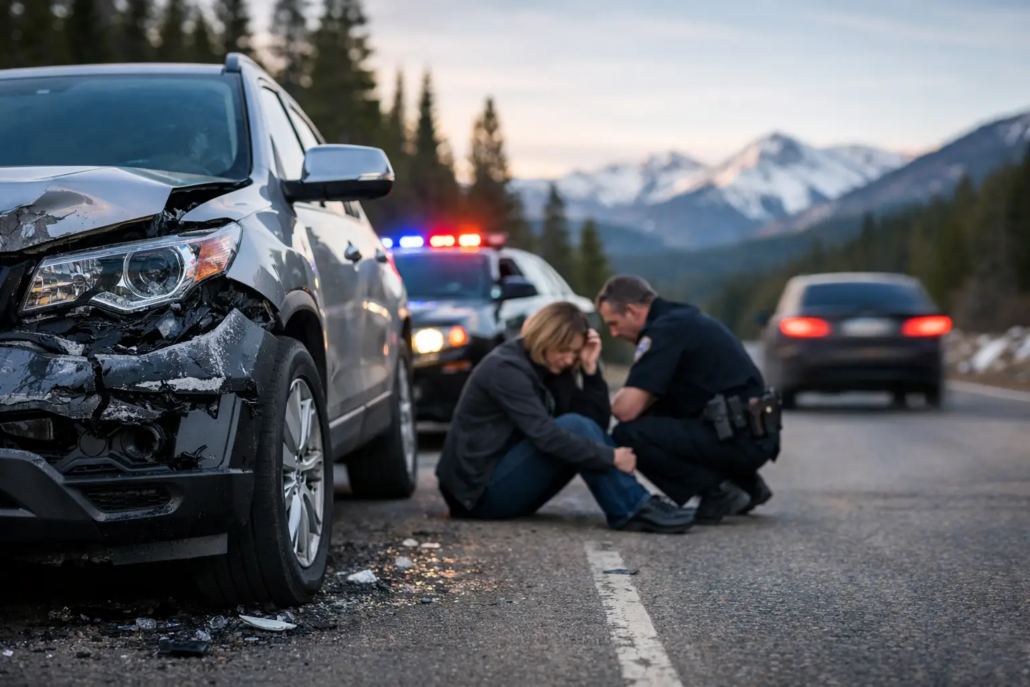
What to Do After a Colorado Hit and Run Accident
A driver leaves the scene, and suddenly you are left with pain, vehicle damage, unanswered questions, and no one to hold accountable. After a Colorado hit and run accident, the actions you take in the first hours can protect both your health and your ability to pursue compensation later.
The driver who fled may never be identified. That does not mean you are out of options. Police evidence, witness accounts, camera footage, and your own uninsured motorist coverage may all matter. Start by taking care of yourself, then preserve what you can before critical evidence disappears.
Put Safety and Medical Care First
Move your vehicle out of traffic only if it is safe to do so. Turn on hazard lights, check yourself and passengers for injuries, and call 911 if anyone is hurt or the crash has created a dangerous roadway condition. Do not chase the other driver. A pursuit can create another collision, place you in danger, and make an already difficult situation worse.
Adrenaline can hide serious injuries. Neck, back, head, and internal injuries may not be obvious at the scene. Seek a medical evaluation promptly, especially after a forceful impact, a blow to the head, dizziness, numbness, chest pain, or abdominal pain. Medical records also provide a clear timeline connecting the collision to the treatment you need.
If you are physically able, take photographs and video of the scene, your vehicle, debris, skid marks, roadway signs, and any visible injuries. Save damaged clothing or personal items rather than throwing them away. Small details can become meaningful when an insurer later questions how the crash happened.
Report the Colorado Hit and Run Accident
Call law enforcement and make sure a report is created. In Colorado, drivers involved in a collision generally have duties to stop, exchange identifying and insurance information, and provide reasonable assistance when someone is injured. Leaving the scene can carry serious criminal consequences, particularly when a crash involves injury or death.
A police report does not guarantee that officers will find the driver, but it creates an official record of what occurred. Give the responding officer every detail you remember: the vehicle’s make, model, color, direction of travel, damage, partial license plate, bumper stickers, company markings, or a description of the driver. Do not guess. A reliable partial fact is more useful than an uncertain full description.
Ask witnesses to stay until police arrive if possible. If they cannot wait, get their names, phone numbers, and email addresses. Nearby businesses, homes, parking lots, and intersections may have security or traffic cameras. Footage can be erased quickly, sometimes within days, so identify potential cameras immediately and write down their locations.
Write Down What You Remember
Memory changes faster than most people expect after a frightening crash. As soon as you can, make notes about the time, weather, traffic, exact location, sequence of events, and anything you saw or heard. Include statements made by witnesses and the name or badge number of the responding officer if available.
Keep copies of all crash-related materials in one place: the report number, photographs, medical paperwork, repair estimates, receipts, insurance correspondence, and missed-work information. This is not busywork. It gives your claim a factual foundation when the other driver is absent and the evidence must speak for itself.
Notify Your Insurer Carefully
Report the collision to your auto insurer promptly. Most policies require timely notice, and waiting can give an insurer an argument that the delay interfered with its investigation. Tell the truth, provide the basic facts, and keep a record of the claim number and every conversation.
Be careful about recorded statements, broad medical authorizations, or quick settlement offers. An insurance adjuster may sound helpful while also evaluating ways to limit what the company pays. You can report the loss without agreeing to a final account of fault, accepting a payment, or signing documents you do not understand.
When the fleeing driver cannot be located or does not have insurance, uninsured motorist coverage may be central to the claim. This coverage can apply to a hit-and-run crash under many policies, but the terms, notice requirements, exclusions, and available limits matter. Medical payments coverage, if included in your policy, may also help with immediate medical bills regardless of fault.
Insurance is not one-size-fits-all. The outcome can depend on the policy language, the vehicles listed on the policy, the people insured, the evidence that contact occurred, and whether there are other sources of coverage. An attorney can review those details before you make a decision that limits your recovery.
Proving a Claim When the Driver Is Gone
A hit-and-run claim is still a personal injury claim. You may need to show that another driver’s conduct caused the crash, that you suffered injuries, and that your losses are connected to those injuries. The evidence can include vehicle damage, scene photographs, witness testimony, surveillance footage, medical records, accident reconstruction, and data from the vehicles involved.
The absence of the other driver can make insurers more skeptical. They may challenge whether another vehicle caused the collision, argue that damage existed beforehand, or question the severity of injuries that appear after the crash. That is why immediate reporting, consistent medical care, and careful documentation matter so much.
Compensation may include medical expenses, future treatment needs, lost income, reduced earning ability, pain and suffering, physical impairment, and property damage. The appropriate value depends on the facts, not a formula. A minor collision with short-term treatment is different from a crash that leaves someone unable to work, care for family, or live without chronic pain.
Do Not Let the Investigation Go Cold
Police investigations and insurance investigations are not the same thing. Law enforcement may focus on identifying and charging the driver. A civil claim focuses on obtaining compensation for the person harmed. Those paths can overlap, but one does not replace the other.
Evidence can disappear while you wait for an update. Video systems overwrite recordings. Witnesses move or forget details. Vehicles are repaired or totaled. Medical symptoms may worsen while an insurer waits for more information. Acting early gives you a better chance to preserve proof and understand the coverage available.
Colorado also has deadlines for injury claims, and the correct deadline can depend on the type of claim and the parties involved. Do not assume that a pending criminal investigation extends the time to protect your civil rights. Waiting until a deadline is close can create avoidable pressure and lost options.
When It Makes Sense to Speak With a Lawyer
A brief consultation can be especially valuable when you have significant injuries, missed work, a disputed account of the crash, an insurer denying uninsured motorist coverage, or an unidentified driver. It can also help when you are too injured to manage calls, paperwork, and evidence requests on your own.
Neumann Law Group offers free consultations and is available 24/7 for injured people who need answers after a Colorado crash. If travel is difficult because of your injuries, ask about options for meeting where you are.
You do not need to know the name of the fleeing driver before asking for help. Preserve the report, get the medical care you need, keep the evidence you have, and get clear advice before an insurer’s deadline or a fading memory makes an already difficult claim harder to prove.

