
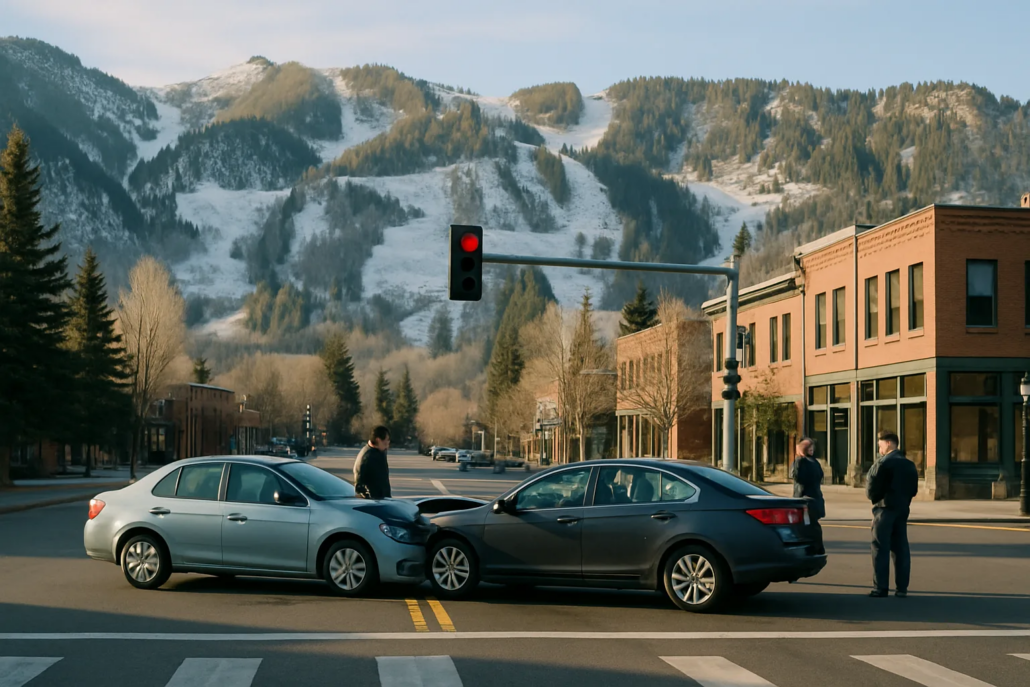
Where Could an Aspen Intersection Crash Attorney Find Proof?
An intersection crash can leave two drivers with very different memories. One may believe the light was green, while the other recalls having the right of way. In Aspen, changing traffic conditions, turn lanes, mountain sight lines, pedestrians, and seasonal congestion can make a collision especially difficult to reconstruct. An Aspen intersection car accident lawyer may examine traffic-signal evidence and other independent information to determine which account is supported.
Preserving evidence matters because some information may be difficult to obtain later. Dashcam files can be overwritten, nearby video may be routinely deleted, and vehicle positions can change once cars are moved. Neumann helps readers understand the types of evidence that may clarify a crash without assuming that any single item proves fault. This article covers what to document after an intersection collision, how attorneys may evaluate the evidence in Colorado, and common mistakes that can weaken an insurance or injury claim.
How an Aspen Intersection Car Accident Lawyer Uses Signal Evidence
Traffic-signal evidence is more than a driver’s memory of seeing red or green. An investigation may consider the signal phase, timing sequence, direction of travel, lane position, and whether a driver was turning or proceeding straight. These details can help create a timeline of the moments before impact.
Signal phase and timing
Depending on the intersection and the information available, signal timing records may help show when a light changed and how long a phase lasted. A timing plan does not necessarily establish what a particular driver saw at the instant of impact, but it may help test whether different accounts are physically consistent.
A lawyer may also consider whether a driver entered during a yellow phase, turned across opposing traffic, or proceeded after a red indication. The analysis can involve the intersection’s layout, approach speed, stopping distance, and the position of each vehicle. A traffic light accident claim in Aspen may therefore require more than a photograph of the signal itself.
Direction, lane position, and sight lines
After a collision, write down or photograph, when safe, the following details:
- The direction each vehicle was traveling.
- The lane each vehicle occupied, including a turn lane.
- Whether either vehicle was turning, merging, or changing lanes.
- The apparent signal phase for each direction of travel.
- Obstructions affecting visibility, such as larger vehicles, landscaping, weather, or roadway design.
These observations can become less reliable as time passes. They should be recorded as recollections, not presented as exact measurements unless supported by other evidence.
What Evidence Can Support a Traffic Light Accident Claim in Aspen?
Signal information is only one part of an intersection investigation. A careful review may compare several sources to determine whether they tell a consistent story. In Aspen and elsewhere in Colorado, relevant materials may be held by different people or organizations, and availability can vary by location and retention practices.
Potential sources include:
- Dashcam footage. A driver’s camera, a passenger’s recording, or footage from another vehicle may show the signal, lane positions, approach, or impact. The original file and surrounding footage can be more useful than a shortened clip.
- Vehicle event data. Some vehicles record information about speed, braking, accelerator input, or other pre-crash conditions. Access, interpretation, and reliability depend on the vehicle and the circumstances.
- Surveillance video. Businesses, residences, parking facilities, transportation systems, or public locations may have cameras that capture an approach to the intersection. Video is not always aimed at the roadway, and retention periods may be limited.
- Physical damage and debris. Crush patterns, paint transfer, broken parts, debris fields, and final resting positions may help an investigator assess angles and movement. Photographs taken before repairs can be important.
- Independent witnesses. A witness who was not riding in either vehicle may provide useful information about the signal, speed, turn, or sequence of events. Contact information is more valuable than relying on memory of a name or location.
In a red light crash evidence review, these sources should be compared rather than treated as automatically conclusive. Colorado claims can involve questions of shared responsibility, insurance coverage, and proof of damages. Applicable rules and procedures may vary by county and may change over time, so an attorney evaluating an Aspen collision will consider the current circumstances and jurisdiction.
Preserving Intersection Collision Evidence Without Compromising a Claim
People often focus on vehicle repairs or insurance calls immediately after a crash. Those matters may be necessary, but evidence preservation also deserves attention. A driver should generally prioritize safety, emergency assistance, and required exchanges of information. Once immediate concerns are addressed, the following practices may help preserve useful information:
- Keep original photographs, videos, and dashcam files in their original format when possible.
- Make a written account of the direction of travel, lane position, signal phase, weather, visibility, and roadway conditions.
- Record the names and contact information of witnesses, including where they were standing or driving.
- Photograph vehicle damage, debris, lane markings, nearby signals, sight lines, and relevant surrounding conditions when safe.
- Identify nearby businesses, residences, or public facilities that may have cameras, without trespassing or interfering with equipment.
- Avoid guessing about fault in a recorded statement or social media post when the facts remain uncertain.
A person should not attempt to retrieve restricted video, alter a vehicle, or conduct an unsafe roadside investigation. Depending on the facts, an intersection collision attorney may help identify evidence sources and communicate with insurers or other parties. That does not mean every available recording will be obtained or that a particular item will resolve the dispute.
For an Aspen crash, local conditions may also matter. Snow, glare, steep approaches, construction, tourist traffic, and unfamiliar roadway patterns can affect visibility and perception. These factors should be documented carefully rather than used as assumptions about responsibility.
Frequently Asked Questions
How soon should I look for dashcam evidence after an Aspen crash?
As soon as it is reasonably safe, preserve the original dashcam file and any related footage before the device overwrites it. Ask passengers or nearby drivers whether they recorded the collision. You may also note potential business or public cameras near the intersection. Retention practices vary, so an attorney may help assess what preservation request or follow-up could be appropriate for a Colorado claim.
Can vehicle damage prove who had the green light?
Vehicle damage usually cannot prove the signal phase by itself. It may, however, help show the direction of impact, relative positions, and whether the accounts are consistent with the physical evidence. Investigators may compare damage with photographs, debris, vehicle data, video, and witness accounts. The value of the evidence depends on its condition, completeness, and the circumstances of the collision.
What if I do not know the traffic signal timing?
Do not estimate technical timing as a fact if you are unsure. Instead, preserve your recollection of what you saw, when you entered the intersection, and which lane you occupied. Signal timing information may be available through appropriate records or investigation, depending on the intersection. A qualified Colorado attorney can explain what evidence may be relevant to your circumstances.
Should I give an insurer my full account of the intersection crash?
Insurance communications can affect a claim, and the appropriate response depends on the policy, the parties involved, and the facts known at the time. It is generally wise to be truthful and avoid speculation, exaggeration, or unsupported conclusions. Before providing a detailed recorded statement, a person may wish to understand the purpose of the request and obtain advice specific to the claim.
How Neumann Can Help
Neumann is dedicated to helping people understand the evidence that may matter after a car or auto accident. The firm can evaluate the available information, including signal timing, lane position, dashcam evidence, vehicle damage, event data, surveillance, sight lines, and witness accounts. An attorney may also explain how Colorado rules and insurance procedures could apply, while recognizing that each intersection crash is different.
If you were involved in an Aspen intersection collision, contact Neumann for a free consultation or case evaluation. The team is committed to fighting for your rights and is ready to evaluate your situation without promising a particular outcome.
The information in this article is for educational purposes only and does not constitute legal advice. Contact a qualified attorney licensed in Aspen for advice specific to your situation.

