
How Can You Review an Aspen Car Accident Total Loss Claim?
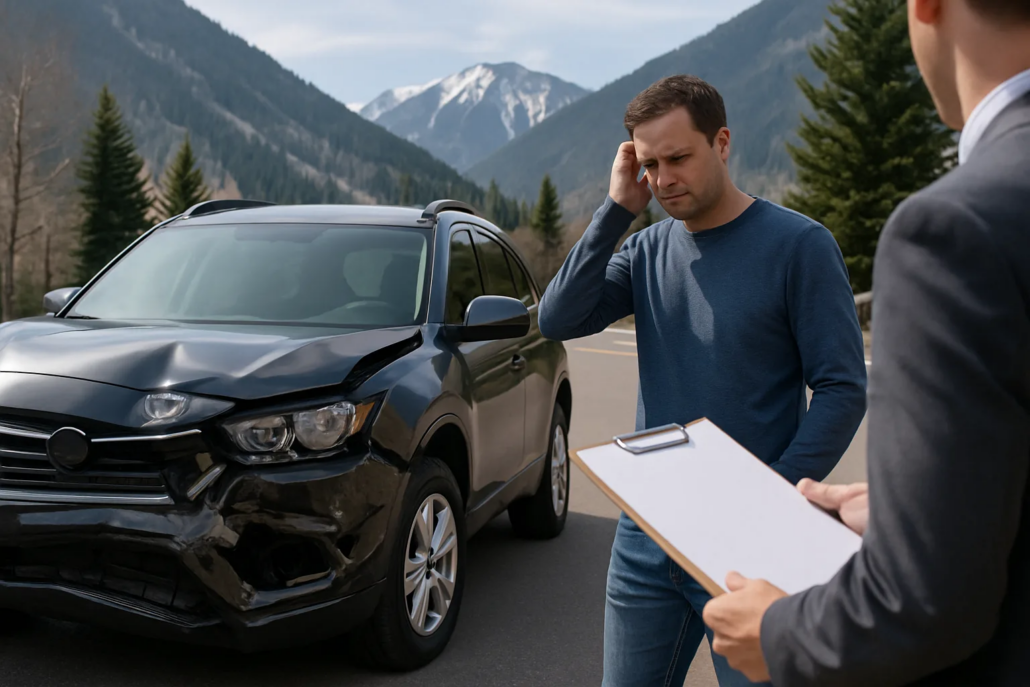
A serious crash can leave a vehicle looking repairable while the insurer reaches a different conclusion. In Aspen, a driver may receive a total-loss valuation based on the vehicle’s pre-collision market value, even when the repair estimate appears manageable at first glance. That can make the question, “How can you review an Aspen car accident total loss claim?” especially important when the proposed payment does not seem to match the vehicle you owned.
A total-loss decision is separate from a diminished-value claim. Diminished value concerns the reduction in a repaired vehicle’s market value after an accident. A total-loss claim instead focuses on whether the vehicle should be repaired or paid for based on its actual cash value and related transaction costs. Neumann helps readers understand these distinctions and the records that may affect a property-damage dispute.
This article covers how insurers commonly assess a total loss, how to check comparable vehicles and omitted equipment, and how to preserve receipts for taxes, fees, financing, rental transportation, and other expenses. Colorado insurance practices and available remedies can depend on the policy, the facts, and the applicable law.
How Is an Aspen Car Accident Total Loss Claim Valued?
Insurers generally compare the estimated cost of repairs with the vehicle’s actual cash value immediately before the collision. Actual cash value is usually intended to reflect the vehicle’s market-based value, considering factors such as age, mileage, condition, model, equipment, and the local market. It is not necessarily the same as the amount needed to buy a newer or upgraded replacement vehicle.
Repair cost is only one part of the decision
A vehicle may be treated as a total loss when repairing it would not be economically reasonable compared with its pre-crash value. The exact approach can depend on the insurance policy, the insurer’s valuation process, salvage considerations, and applicable Colorado requirements. A repair estimate alone does not establish the vehicle’s value, and a valuation report alone may not explain every assumption used.
Review whether the report accurately identifies:
- The vehicle’s year, trim, mileage, drivetrain, and body style
- Prior condition, maintenance, and documented upgrades
- Factory and aftermarket equipment included before the crash
- Damage that may affect the repair estimate or salvage value
- The geographic market used to select comparable vehicles
In Aspen, market conditions can differ from larger Colorado cities. A report that relies heavily on distant vehicles may deserve closer review if those vehicles do not reflect the same equipment, condition, mileage, or local availability. The goal is not to demand an unsupported number, but to determine whether the valuation is based on comparable information.
What Should You Check in the Insurer’s Total-Loss Valuation?
A proposed payment can look precise while still containing incorrect inputs. Before accepting or disputing an amount, an owner may organize the valuation and compare it with independent records. This can help identify a factual error or clarify why the insurer reached its conclusion.
Use a practical valuation checklist
Check the following items:
- Comparable vehicles: Are the listed vehicles genuinely similar in year, trim, mileage, condition, drivetrain, and equipment? Look for differences that affect value rather than relying only on the advertised price.
- Omitted options: Confirm that features such as upgraded packages, four-wheel drive, premium components, safety equipment, towing features, roof systems, or specialized accessories are included when appropriate.
- Condition adjustments: Review whether the report accurately describes maintenance, interior condition, tires, service records, and prior damage.
- Taxes and fees: Determine whether the proposed payment addresses applicable sales tax, registration-related charges, title costs, or other reasonable transaction expenses under the policy and claim circumstances.
- Deductibles and salvage: Understand any deductible, salvage retention choice, or title consequence that changes the net payment.
For an Aspen driver, it may also help to preserve local listings, dealer inquiries, valuation records, purchase documents, and photographs taken before the collision. The Colorado Division of Insurance provides consumer information about insurance matters, but it does not replace a review of the policy or individualized legal guidance. Laws and procedures can vary by location and may change.
How Can You Challenge a Disputed Total-Loss Valuation?
A disagreement does not automatically mean the insurer acted improperly. It may reflect different assumptions about condition, equipment, mileage, comparable vehicles, or the meaning of the policy’s valuation language. Still, a careful written response can help narrow the dispute and preserve the basis for further review.
Preserve records before expenses disappear
Keep copies of the valuation report, repair estimates, photographs, purchase documents, maintenance records, loan statements, and communications with the insurer. Preserve receipts for rental transportation, rideshare trips, towing, storage, inspection charges, and other accident-related expenses. These items may not all be reimbursable, but without documentation it can be harder to evaluate whether they are covered or relevant.
Financing also requires attention. A vehicle loan balance may be higher than the vehicle’s actual cash value. Unless separate gap coverage applies, the insurer’s property-damage payment may not automatically pay off the loan. The borrower generally remains responsible for understanding the loan terms while the claim is being evaluated.
If the valuation appears inaccurate, a driver may present specific corrections, supporting documents, and better comparables. Depending on the policy and circumstances, an attorney may also evaluate coverage, fault, contractual issues, or whether additional expenses are legally recoverable. A disputed total-loss valuation is different from a diminished-value claim: one concerns payment for a vehicle treated as a total loss, while the other generally concerns residual market loss after repair.
Frequently Asked Questions
Can I keep my damaged vehicle after it is declared a total loss?
Possibly, depending on the insurer, lienholder, title requirements, salvage rules, and applicable Colorado procedures. Keeping the vehicle can reduce the payment because the insurer may deduct the vehicle’s salvage value. A retained salvage vehicle may also involve inspection, branding, registration, and future resale issues. Before making that choice, an owner may benefit from reviewing the financial and practical consequences with an attorney and the relevant agencies.
Does a total-loss payment include the amount left on my auto loan?
Not necessarily. The claim valuation generally focuses on the vehicle’s covered value, while the loan balance is controlled by the financing agreement. If the balance exceeds the vehicle’s actual cash value, a gap may remain unless separate gap coverage or another applicable source addresses it. Reviewing the loan payoff statement, policy language, and proposed settlement together can help clarify the financial picture.
Can I claim diminished value when my vehicle is totaled?
Usually, diminished value and a total-loss valuation address different issues. Diminished value generally concerns a vehicle that is repaired but worth less because of its accident history. A total-loss claim instead concerns the vehicle’s pre-crash value and the payment used instead of repair. Whether any additional amount is available depends on the policy, responsible parties, evidence, and Colorado law applicable to the claim.
What if the insurer’s comparable vehicles are not in Aspen?
Distance alone may not invalidate a comparable, particularly in a smaller or specialized market. The more important question is whether the vehicles are comparable in trim, mileage, condition, equipment, and market context. A driver may collect other credible listings or valuation evidence and explain specific differences. An attorney can help assess whether the comparison method supports a reasonable dispute under the policy and circumstances.
How Neumann Can Help
Neumann is dedicated to helping injured and affected Colorado drivers understand the property-damage issues that can follow a crash. The firm can review the total-loss valuation, repair estimates, comparable vehicles, omitted equipment, policy language, financing information, and receipts for related expenses. Depending on the facts, an attorney may help distinguish a valuation disagreement from a diminished-value issue and explain potential options for addressing the dispute.
If an insurer’s proposed payment does not appear to reflect your vehicle or documented expenses, contact Neumann for a free consultation or case evaluation. The team is committed to fighting for your rights while providing guidance tailored to the facts and applicable Colorado law.
The information in this article is for educational purposes only and does not constitute legal advice. Contact a qualified attorney licensed in Aspen for advice specific to your situation.


Leave a Reply
Want to join the discussion?Feel free to contribute!