
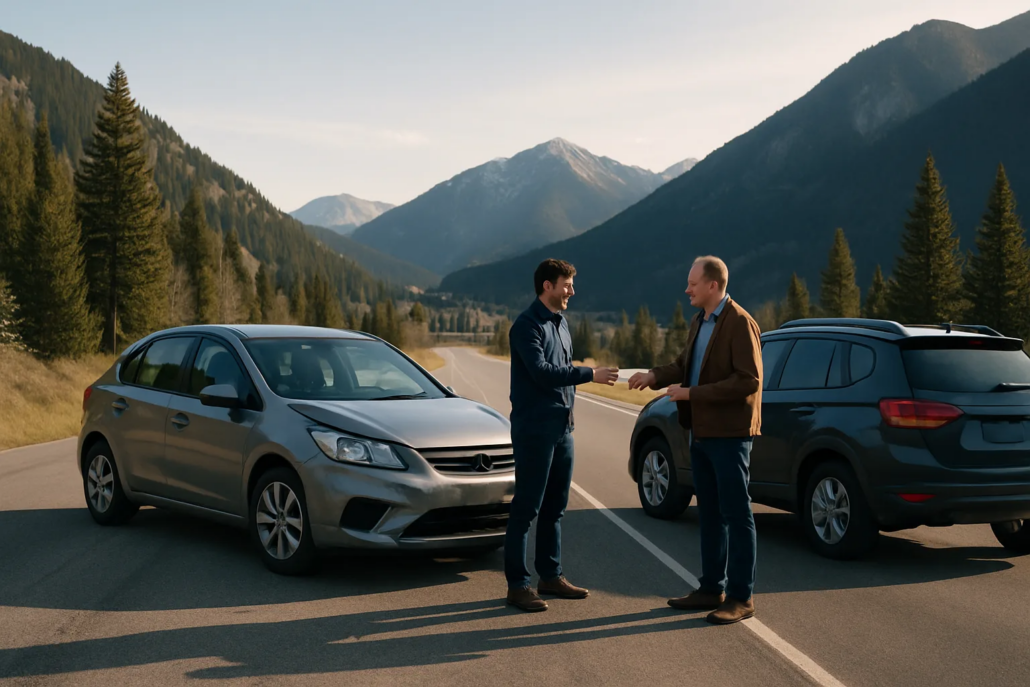
Where Is an Out-of-State Driver Crash in Colorado Reported?
A Colorado collision can become more complicated when the other driver lives in another state. The immediate steps are usually the same: check for safety, contact law enforcement when appropriate, exchange information, and seek medical attention for possible injuries. However, a Colorado car accident with an out-of-state driver may also involve an unfamiliar insurer, a rental company, an out-of-state insurance policy, and questions about where a claim or lawsuit belongs.
For someone injured on a Denver street, an Aspen mountain route, or another Colorado roadway, those details can affect how evidence is collected and how coverage is evaluated. Neumann provides practical legal guidance to people who are trying to understand these issues. This article explains what information to gather, how to report and preserve evidence, and why the collision location can matter even when the other driver lives elsewhere.
What Information Should You Collect After a Colorado Car Accident with an Out-of-State Driver?
An out-of-state license plate does not by itself determine fault or eliminate a Colorado claim. The most useful early evidence identifies the people, vehicles, insurers, and exact location involved. If it is safe to do so, collect the following before vehicles or conditions change:
- The driver’s full name, contact information, driver’s license state, and license number if lawfully available.
- The vehicle owner’s name if it differs from the driver’s name.
- The license plate number, issuing state, vehicle make, model, and identifying features.
- The insurance company, policy number, claims telephone number, and the state that issued the policy.
- Rental-car company information, reservation details, and any agreement or coverage documents available to the driver.
- Photographs or video of vehicle positions, damage, traffic controls, lane markings, weather, lighting, and nearby businesses or residences.
- Names and contact information for witnesses, along with the responding agency and incident or report number.
Why the exact Colorado location matters
Write down the road, intersection, direction of travel, nearest address, county, and any relevant mile marker. A collision in Denver may involve different local agencies and court venues than one in Pitkin County near Aspen. A precise location can also help identify traffic-camera systems, nearby surveillance, roadway design, and weather conditions.
Do not guess about the other driver’s coverage. Photographing an insurance card or rental agreement, when permitted, can reduce errors caused by copying a policy number or company name incorrectly.
How Do Reporting, Insurance, and Forum Questions Affect the Claim?
A Colorado crash should generally be reported to the appropriate law enforcement agency when required by the circumstances or when an investigation is needed. Depending on the location and severity, that may involve Colorado State Patrol, a municipal police department, or a county sheriff’s office. An officer’s report is one source of evidence, not necessarily the final word on liability.
The at-fault driver’s policy may be issued in another state, and its terms can differ from a policy purchased by a Colorado resident. Coverage questions may include liability limits, exclusions, permissive use, household-driver provisions, and whether another policy is available. If the vehicle was rented, the rental company’s insurance, the renter’s personal policy, and benefits from a credit-card or travel program may each require separate review. The existence of an additional policy does not automatically mean it will cover every loss.
Which state law applies to a car accident?
Generally, the law of the place where the crash occurred is an important starting point for conduct and liability questions. But choice-of-law analysis can be fact-specific. Policy language, the parties’ residences, the insurance relationship, and the issues being litigated may affect which rules apply. A claim arising from a Colorado roadway is not automatically governed in every respect by the other driver’s home-state law.
Forum is a separate question. A claim might be negotiated with an insurer without court involvement. If litigation becomes necessary, venue and personal-jurisdiction questions may depend on where the crash occurred, where the parties live, and other connections to the forum. Denver and Aspen-area disputes can involve different county or district court locations. An attorney can evaluate these issues under current Colorado law and the facts of the particular collision.
What Mistakes Can Weaken an Interstate or Tourist Collision Claim?
People often focus on the other driver’s state of residence and overlook evidence that is easier to lose. A practical preservation plan can include:
- Keep a location record. Save map information, photographs, vehicle-position details, and notes about road conditions. Colorado roadway evidence may change after snow removal, construction, repairs, or ordinary traffic activity.
- Preserve medical records. Keep discharge paperwork, bills, prescriptions, appointment information, work-status documents, and records describing symptoms. Do not alter or summarize records in a way that changes their meaning.
- Report the collision consistently. Provide accurate information to law enforcement and insurers. Avoid guessing about speed, distance, fault, or the extent of an injury when the facts are uncertain.
- Protect electronic evidence. Save photographs, dash-camera files, phone videos, travel receipts, rideshare records, and messages about the crash. Some systems overwrite data quickly.
- Track communications. Keep claim numbers, adjuster contact information, letters, emails, and recorded-statement requests. A different state’s insurer may handle the claim from outside Colorado.
A common mistake is signing a release or accepting a payment before understanding whether it resolves only vehicle damage or also affects injury claims. Another is assuming the police report, vehicle damage, or a quick conversation with an insurer settles every factual and coverage issue. Depending on the circumstances, a Colorado car accident attorney may help organize evidence and explain available options without relying only on the other driver’s account.
Frequently Asked Questions
Does an out-of-state driver have to follow Colorado traffic rules?
Generally, anyone driving on Colorado roads must comply with applicable Colorado traffic requirements while operating a vehicle here. That does not automatically establish liability after a crash. Fault may depend on the specific conduct, roadway conditions, evidence, and the legal issues involved. An out-of-state license or plate is relevant for identifying the driver and insurer, but it is not proof that the driver caused the collision.
Can I make a claim against an insurer located outside Colorado?
Possibly. Claims are often handled by insurers through representatives or claims offices that are not located in the state where the accident occurred. The available coverage depends on the policy, the facts, and applicable law. Keep the claim information and policy details, and be cautious about giving a recorded statement or signing a release before understanding its scope. A licensed attorney can review the coverage and claim process.
What if the other vehicle was a rental car?
A rental-car collision can involve more than one potential source of coverage, including the renter’s personal auto policy, rental-company protections, and certain travel or payment-card benefits. The terms and order of coverage vary. Preserve the rental agreement, reservation information, insurance documents, and communications with the rental company. Colorado law and the applicable policy language should be reviewed together rather than assuming the rental company or renter is solely responsible.
Can I pursue a claim in Colorado if I live in another state?
Possibly. The place where the crash occurred is often important to liability and forum analysis, but the correct venue and applicable law depend on the parties, claims, insurance policies, and other facts. A visitor injured in Colorado may have a claim connected to Colorado even if the visitor later returns home. Because deadlines and procedural requirements can vary, timely advice from a licensed attorney may be useful.
How Neumann Can Help
Neumann is dedicated to helping people understand the issues that can arise after a Colorado car accident with an out-of-state driver. The firm can evaluate available information about the collision location, vehicle ownership, insurance policies, rental arrangements, medical records, and roadway evidence. Its approach is focused on careful fact development, clear communication, and protecting the client’s ability to make informed decisions.
Whether the crash occurred in Denver, Aspen, or another Colorado community, Neumann is committed to fighting for clients’ rights while recognizing that each claim depends on its facts and governing law. Contact Neumann for a free consultation or case evaluation to discuss your situation and explore your legal options.
The information in this article is for educational purposes only and does not constitute legal advice. Contact a qualified attorney licensed in Denver; Aspen for advice specific to your situation.


Leave a Reply
Want to join the discussion?Feel free to contribute!