
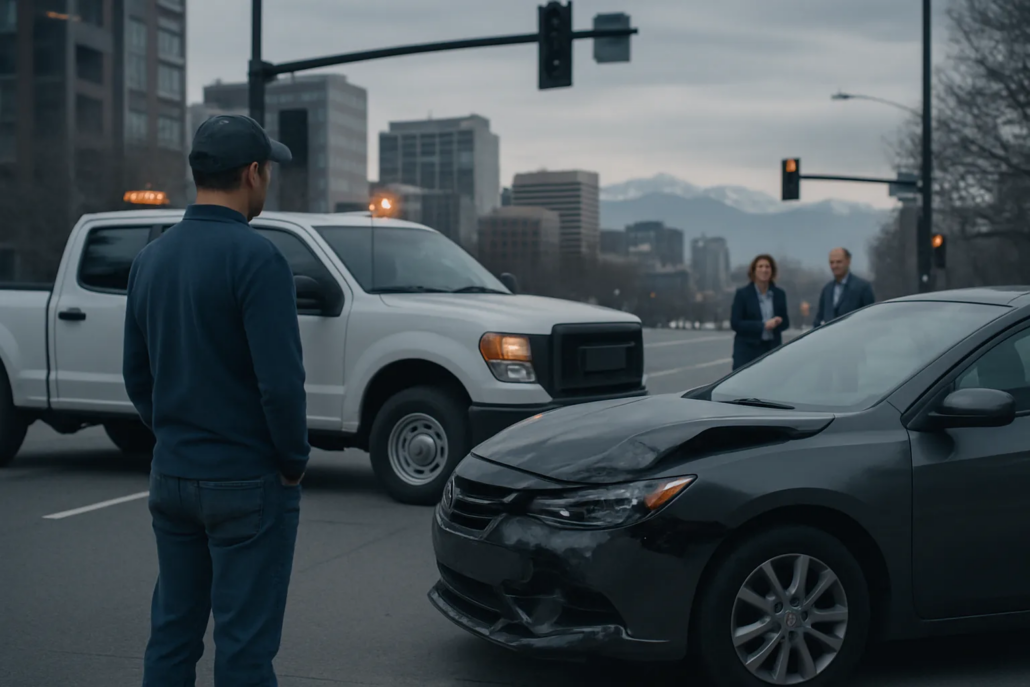
Which Proof Matters After a Denver City Vehicle Crash?
A collision with a marked municipal truck, police vehicle, utility vehicle, or other public vehicle can leave an injured person with more questions than a standard two-car crash. Who owns the vehicle? Was the driver working at the time? Which government entity should receive notice, and does a special deadline apply?
A Denver accident involving a city vehicle may raise those issues in addition to ordinary questions about fault, insurance, property damage, and medical treatment. Colorado public-entity claims can involve the Colorado Governmental Immunity Act (CGIA), which has specific rules and exceptions that may differ from a private-party claim. Those rules can be fact-dependent and may change over time.
Neumann can help readers understand why early evidence preservation matters. This guide covers what to document, how public-entity status may affect a claim, and how to approach communications with government representatives and insurers. It is general information, not a case evaluation or legal advice.
Why a Denver Accident Involving a City Vehicle May Follow Different Rules
When a private driver causes a crash, a claim commonly proceeds through the driver’s insurer and possibly the driver or the driver’s employer. A public vehicle collision can involve additional layers. The vehicle may belong to the City and County of Denver, another governmental entity, a contractor, or a private company performing work for a public agency.
Identify the vehicle and responsible entity
Vehicle markings alone may not establish ownership or legal responsibility. A city department may operate a vehicle leased from another company, while a contractor may use a vehicle at a public work site. The driver’s employer, the vehicle owner, and the entity responsible for the activity may all be relevant.
Useful information may include:
- The vehicle’s license plate, unit number, department name, or other identifying features
- The driver’s name and employer, if provided
- The precise location, direction of travel, and time of the collision
- Photographs of the vehicles, roadway, traffic controls, and visible markings
- Names and contact information for witnesses
A person should avoid guessing about ownership or fault. A Denver police crash report, vehicle records, employment information, or later investigation may clarify those questions.
Governmental immunity is not a simple yes-or-no issue
Colorado’s CGIA generally limits when a public entity may be sued, while also recognizing particular circumstances in which immunity may be waived. Whether an exception applies can depend on the conduct involved, the entity, the location, and the facts surrounding the crash. Immunity, claim procedures, damages limits, and deadlines require careful jurisdiction-specific analysis.
What to Preserve After a Colorado Government Vehicle Accident Claim Begins
Preservation is especially important when a public vehicle may be involved because relevant evidence can exist in separate systems. Depending on the vehicle and agency, potentially useful material might include dispatch records, onboard camera footage, telematics, maintenance records, incident reports, or employment records. Availability and retention periods vary.
Create an organized evidence record
As soon as reasonably possible, a person involved in a Denver crash may want to organize copies of:
- Scene and vehicle photographs, including damage from several angles
- Medical records and bills received for crash-related evaluation or care
- Wage or income documentation if the injuries affected work
- Insurance correspondence, claim numbers, and contact information
- Names of witnesses and a brief description of what each person observed
- Every letter, email, text, or phone-call note involving an agency, insurer, or representative
Photographs should show the overall scene as well as close details. If a vehicle is repaired, sold, moved, or inspected, photographs and repair documentation may become important substitutes for evidence that is no longer available.
Consider notice and reporting questions promptly
The CGIA may require notice to the appropriate public entity within a defined period, and that period can be shorter or different from a standard civil filing deadline. The correct recipient and required information may depend on the entity involved. Sending an informal message to a driver, department, or general contact address may not satisfy a legal notice requirement.
A crash report is useful, but it may not itself serve as statutory notice. A lawyer evaluating a Colorado government vehicle accident claim can assess the potentially responsible entity, applicable notice requirements, and whether other deadlines may apply. Laws and procedures vary by location and may have changed since publication.
Common Mistakes in a Denver Public Vehicle Crash Claim
A collision with a government employee can feel formal or intimidating, particularly when an agency representative, risk-management office, or government-affiliated insurer contacts the injured person. The communications may be routine, but they can still become part of the claim record.
Communicate carefully and preserve consistency
Generally, a person should provide accurate basic information and avoid speculation about speed, distance, injuries, or fault. It can be helpful to keep a written record of calls, including the speaker’s name, agency or company, date, and subject. Before signing a release or broad medical authorization, an attorney may review what the document permits and whether it could affect other parts of the claim.
Other common problems include:
- Waiting to identify the public entity or vehicle owner
- Assuming the crash report answers every liability question
- Posting photographs or detailed opinions about the collision online
- Discussing settlement value before the medical picture is clearer
- Failing to document symptoms, appointments, restrictions, or expenses
- Overlooking a possible contractor, fleet owner, or separate insurer
A Denver public vehicle crash lawyer may examine vehicle ownership, the driver’s job duties, agency policies, available video, road conditions, witness accounts, and the applicable immunity analysis. The goal is not to assume liability, but to identify which facts require verification.
Frequently Asked Questions
Does a crash with a city vehicle automatically create a claim against Denver?
No. A city vehicle’s involvement does not automatically establish liability or waive governmental immunity. The analysis may depend on who owned the vehicle, whether the driver was acting within assigned duties, what caused the collision, and whether a statutory exception applies. The City and County of Denver may not be the responsible entity in every case. A licensed Colorado attorney can assess the facts and potential defendants.
Is a police crash report enough to protect a government vehicle claim?
Not necessarily. A crash report can preserve important facts, but it may not satisfy any separate notice requirement under Colorado law. Notice may need to go to a particular public entity and include specific information within a defined period. Because the correct procedure depends on the government body and claim circumstances, a report should not be assumed to replace formal legal notice.
What if the city vehicle was operated by a contractor?
A contractor may create a different liability and insurance analysis from a vehicle owned and operated directly by a public entity. Relevant questions can include the contract, the driver’s employer, control over the work, vehicle ownership, and the conduct that led to the crash. Records identifying the company and vehicle can help an attorney determine which entities and claim rules may require review.
Can I speak with a public-entity representative after the collision?
You may receive calls or letters from an agency, risk-management office, insurer, or claims administrator. Accurate, limited communication may be appropriate, but it is generally wise to avoid guessing, signing releases, or providing broad authorizations without understanding their effect. Keep copies of communications and consider obtaining advice from a qualified Colorado attorney before responding to substantive questions.
How Neumann Can Help
Neumann is dedicated to helping people understand the issues that may arise after a Denver accident involving a city vehicle. The firm can review available photographs, vehicle and witness information, medical documentation, crash reports, insurance communications, and facts concerning ownership or employment. Depending on the circumstances, an attorney may also evaluate governmental-immunity questions, notice procedures, and potentially responsible entities.
Neumann is committed to fighting for clients’ rights while providing a careful, fact-based review rather than making assumptions about the outcome. Contact Neumann for a free consultation or case evaluation to discuss your situation and explore your legal options.
The information in this article is for educational purposes only and does not constitute legal advice. Contact a qualified attorney licensed in Denver for advice specific to your situation.

Leave a Reply
Want to join the discussion?Feel free to contribute!