
Nursing Home Abuse Warning Signs and What to Do
A new bruise, sudden fear around a particular staff member, unexplained weight loss, or a sharp change in your loved one’s personality should never be brushed aside as “part of aging.” Nursing home abuse can leave residents physically injured, emotionally shaken, financially depleted, or dangerously neglected. Families often sense that something is wrong before they have proof. Taking that concern seriously can protect the person you love.
Residents in long-term care facilities depend on staff for basic safety, medication, hygiene, food, mobility, and dignity. When that trust is broken, the consequences can be severe. You do not need to wait until a situation becomes an emergency to ask questions, document concerns, or seek help.
What Nursing Home Abuse Can Look Like
Nursing home abuse is not limited to an act of physical violence. It may involve intentional conduct by a staff member, another resident, a visitor, or a person with access to the resident. It can also arise from neglect, when a facility fails to provide the care and supervision a resident needs.
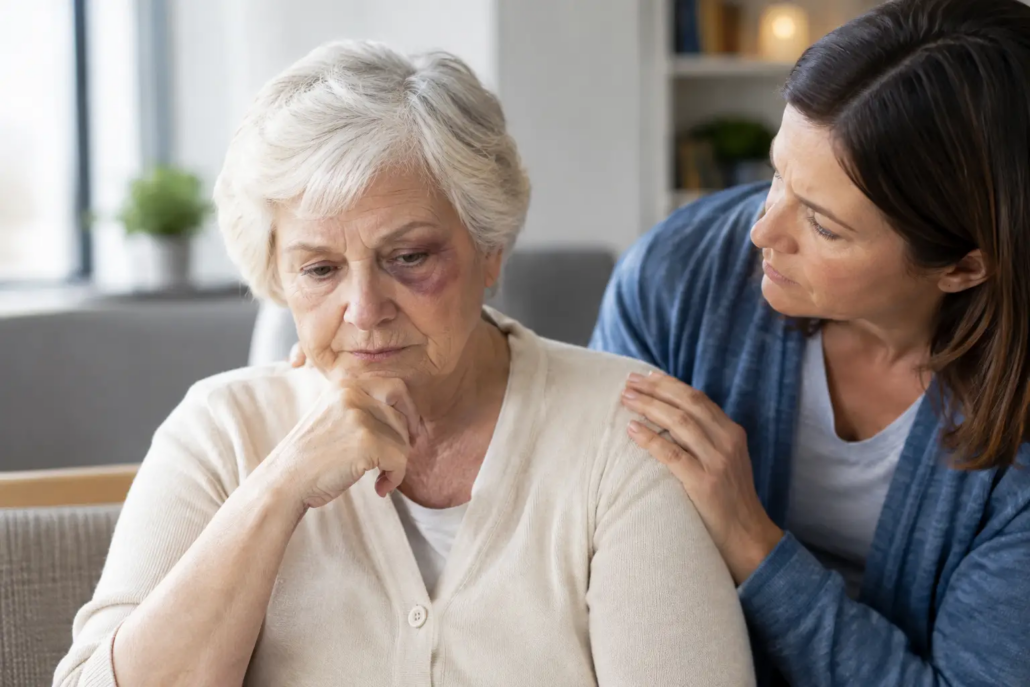
Physical abuse may cause bruises, cuts, fractures, burns, or injuries with explanations that do not make sense. Pay attention to repeated falls, unexplained restraints, or a resident who becomes anxious when certain people enter the room. A single injury does not automatically prove abuse, but patterns and vague explanations deserve scrutiny.
Emotional abuse can be harder to see. It may include threats, humiliation, intimidation, isolation, yelling, or punishment for asking for help. A formerly social resident may become withdrawn, depressed, unusually quiet, or afraid to speak in front of staff. Family members sometimes hear a resident minimize concerns because they fear retaliation or do not want to be a burden.
Neglect is also a serious form of harm. It may appear as dehydration, malnutrition, untreated infections, poor hygiene, pressure sores, missed medications, wandering, or falls caused by inadequate supervision. Staffing shortages do not excuse a facility from meeting residents’ needs. They may help explain how a failure occurred, but they do not erase the harm.
Financial exploitation can involve missing cash, unusual withdrawals, unauthorized changes to accounts, forged signatures, or pressure to give gifts to caregivers. Review financial activity promptly if your loved one is no longer able to manage money independently.
Warning Signs Families Should Not Ignore
The clearest sign is often a change without a credible explanation. Staff should be able to tell you what happened, when it happened, who was present, and what care followed. If answers change from one conversation to the next, records are incomplete, or staff discourage you from visiting, document those concerns.
Watch for physical changes such as untreated injuries, bedsores, dirty clothing or bedding, rapid weight loss, dehydration, and frequent infections. Behavioral changes matter just as much. A resident who suddenly refuses care, flinches at touch, cries before visits end, or asks not to be left alone may be communicating distress in the only way they can.
Some warning signs have innocent explanations. Bruising can result from fragile skin or prescribed blood thinners. Confusion may be caused by dementia, illness, or medication changes. That uncertainty is not a reason to do nothing. It is a reason to ask careful questions, preserve information, and obtain appropriate medical attention.
What to Do if You Suspect Abuse or Neglect
If your loved one faces immediate danger or needs urgent medical care, call 911. Their health comes first. If possible, request an independent medical evaluation so injuries, dehydration, infections, medication problems, or other conditions are assessed and documented outside the facility.
Then begin creating a clear record. Write down dates, times, names, statements, and descriptions of what you observed. Take photographs of visible injuries, poor conditions, or soiled bedding when appropriate. Save texts, emails, billing records, care plans, medication lists, and any notices the facility provides. Do not alter original records or rely only on memory after a difficult conversation.
Ask the facility for an explanation in writing and request the relevant care records. Be direct, but avoid allowing the facility to move the conversation into a vague verbal discussion with no paper trail. If an administrator says an incident was investigated, ask what was found, what corrective action was taken, and whether the resident’s care plan will change.
You may also report concerns to the appropriate Colorado agencies and, when criminal conduct is suspected, law enforcement. Reporting can help trigger an inspection or investigation, but it does not necessarily preserve all evidence or recover compensation for the resident. Families may need to take separate steps to protect their legal rights.
If a move is necessary for safety, plan carefully. Moving a medically fragile resident can create risks, and a rushed transfer may disrupt medications or treatment. When possible, work with medical providers, obtain copies of records, confirm the receiving facility’s ability to meet the resident’s needs, and make sure necessary medications and medical equipment travel with them.
Why Evidence Matters in a Nursing Home Abuse Claim
Facilities often control the records that explain what happened: staffing schedules, incident reports, care logs, medication administration records, surveillance footage, internal communications, and treatment notes. Some evidence may be overwritten or lost if no one acts quickly. Early documentation can make a meaningful difference.
A nursing home abuse case may involve more than one person or company. The conduct of an individual caregiver matters, but so do the facility’s hiring practices, training, supervision, staffing levels, care policies, and response to prior complaints. A facility cannot simply point to one employee if broader failures created an unsafe environment.
Colorado families should also be cautious about signing paperwork or accepting an explanation before understanding the full situation. After an incident, a facility may ask family members to sign forms, care-plan changes, or statements. Some documents are routine. Others may affect how the incident is characterized. Read them carefully and keep copies.
When to Speak With a Colorado Nursing Home Abuse Attorney
Legal guidance can be useful when injuries are serious, explanations do not add up, records are missing, a resident has died under questionable circumstances, or the facility appears more focused on protecting itself than protecting the resident. An attorney can assess the facts, help preserve evidence, identify potentially responsible parties, and explain whether a civil claim may be available.
A claim may seek compensation for medical expenses, pain and suffering, disability, emotional harm, or other losses allowed by law. In a fatal case, surviving family members may have additional legal questions. The right path depends on the facts, the resident’s condition, the available evidence, and applicable Colorado law. No responsible lawyer should promise a specific result before investigating.
For families in Denver, Aspen, and across Colorado, mobility and timing can make getting help feel difficult. A loved one may need supervision, or you may be balancing hospital visits, work, and family responsibilities. Neumann Law Group offers free consultations and is available 24/7 to discuss injury concerns, including suspected abuse or neglect in a nursing facility.
Trust your concern when something does not feel right. A resident’s safety, comfort, and dignity are not extras in long-term care. They are the standard families have every right to expect.


Leave a Reply
Want to join the discussion?Feel free to contribute!